
New College, Oxford
Student Living and Facilities Close to the Main College Site.
An ambitious scheme with 100 new student bedrooms (net gain of 74) and a subterranean events and music hall near the historic College. Built for longevity, it adopts a ‘less but better’ M&E approach, achieving 44% energy and 22% carbon savings, with a potential 20% offset from future PVs.
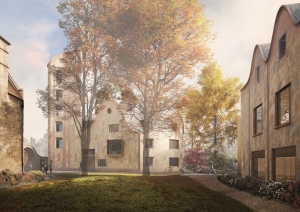
New College, one of Oxford’s largest and most architecturally distinctive colleges, has completed a major expansion with the Gradel Quad development, just four minutes’ walk from the main site. The project adds 100 student bedrooms (a net gain of 74) and introduces Oxford’s first underground concert hall, designed for events, exhibitions, and musical performance.
The development also includes the refurbishment of existing accommodation at Savill House, a Grade II listed building, two additional listed structures, and a neighbouring primary school, alongside the creation of a new porter’s lodge. Two south-facing garden quads form the heart of the site, designed to embrace sunlight and seasonal changes, foster a dynamic microclimate and a strong sense of place.
Built for a lifespan exceeding 100 years, the development reflects a long-term, sustainable vision. The construction process was designed to be waste-neutral with responsibly sourced materials and strong support to the local economy. The project also adopted a 'less but better' approach to building services which resulted in 44% energy savings and a 22% reduction in carbon emissions.
The design features a highly efficient thermal fabric and maximises daylight and ventilation. A timber roof structure replaced a concrete shell, reducing total primary energy use by over 50% and global warming potential by more than 20%. To future-proof the building, the design was tested against climate change scenarios and adapted to improve ventilation and thermal mass through thick clay plaster ceilings.
Efficient heating and hot water are provided by a 100 kW closed-loop ground source heat pump, thermal energy storage, and a micro combined heat and power unit. These are supported by smart building controls that optimising performance across systems. Rainwater recycling reduces demand on mains supply, and the roof is designed to accommodate future organic photovoltaic (PV) cells, with the potential to reduce carbon emissions by a further 20%.
Rooted in tradition and built for the future, the Gradel Quadrangles is a confident addition to New College. It combines low-carbon construction, long-term performance, and a strong sense of place, embodying a visionary approach to sustainable and meaningful academic place-making.
"David Kohn Architects’ sinuous Gradel Quadrangles at New College, Oxford, is one of the most significant recent additions to the historic cityscape, providing 94 student bedrooms, a shared study space and a performance auditorium and facilities for the Gradel Institute of Charity and the adjacent New College School. The judges applauded its 'meaningful' and'joyful' architecture. One judge commented: If you think of it as a piece of townscape, it has really pushed the boundaries. It's a really good response to its historic context." AJ Awards, 2025
Described by Historic England as ‘one of the few instances where contemporary design can be considered genuinely outstanding’.
Awards
2016 – World Architecture Festival shortlisted – Future Projects Education Category
2025 – Schüco Excellence Award Winner
2025 – Building Awards, Building Magazine Project of the Year, shortlisted
2025 – AJ Architecture Awards, Higher Education, Highly Commended
2025 – Prix Versailles Award, World’s Most Beautiful Campuses
2026 – Civic Trust Awards, Regional shortlisted
Notting Hill & Ealing Junior School GDST
A BREEAM Outstanding building for a leading independent education trust.
A new, fully accessible school with sustainable design and enhanced landscaping extends from a central atrium, housing 14 classrooms, a sciencelab, ICT suite, creative arts spaces, and an expanded library. Natural ventilationand air-source heating support comfort and environmental performance.
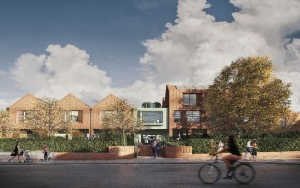
A new low-rise junior school in a residential neighbourhood fronting the Grange and White Ledge Conservation Area sits south of the senior school and shares a central multi-use games facility. Organised around a central atrium, it includes 14 classrooms, a reception, spaces for life sciences, art, music, and a library. Distinct zones accommodate junior, senior, and sixth-form students, with the latter above the junior school, accessed via a separate staircase.
In a residential setting, careful management of external plants was essential. Acoustic treatments helped mitigate aircraft noise from Heathrow, especially on one side of the building. Both acoustics and pedagogy influenced classroom adjacencies, keeping lively spaces like life sciences apart from quieter areas like art and music. Façades were refined through reveals, overhangs, louvers, and glazing depth to balance daylight, ventilation,and acoustic performance.
Sustainability and comfort were key drivers. Classrooms are primarily naturally ventilated, with fresh air drawn through openable windows and atrium rooflights to create a stack effect. In winter, façades incorporate louvers and dampers, allowing moderated ventilation without draughts.
Only specialist spaces such as science, music, and art are served by mechanical systems meeting performance and compliance standards. Low-carbon heating uses air-source heat pumps, with hot water from a hybrid system—half central cylinder, half local electric provision. The saw-tooth roof supports photovoltaics, and upgraded electrical infrastructure allows full electrification without a substation. Enhanced landscaping encourages play and exploration. The design includes wayfinding knitting together classrooms, play areas and circulation routes; with compliant bollards, ground lights and subtle top-of-building illumination.
The new Junior School creates a healthy and inspiring hub. Integrated into its residential context, it reflects a commitment to environmental responsibility, where learning, community, and sustainability thrive.
Oily Cart Theatre
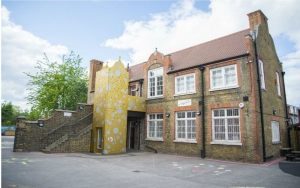
The home of the touring theatre company for young people with complex disabilities, Oily Cart, is located within the Annexe of a Grade II-listed school in South London (Smallwood School) and recently underwent a refurbishment, with a large part of the existing building fabric retained.
ORTUS Learning and Events Centre
Full design and acoustics for an exceptional new learning and events centre
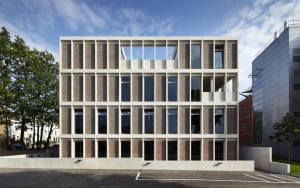
A 1,550sqm building split over seven levels, designed as a flexible learning space. Natural daylight and ventilation, along with thermal mass ensure comfort while a closed-loop ground source system, partially powered by a PV array, provides efficient thermal management. Achieved BREEAM Excellent.
ORTUS is a new learning and events centre based in Camberwell, South London, adjacent to the world-renowned Institute of Psychiatry, Maudsley Hospital and King's College London. Striking architectural features and sustainable technologies underpin this learning environment, which houses teaching and conference facilities, a community café and exhibition spaces.
Conceived as a free-standing pavilion, the building features multi-functional spaces arranged at half-level intervals and connected through a central atrium. Strategic window placement and floor level offsets, allow natural daylight to flood the interior while managing solar gain to prevent overheating. To enhance comfort and efficiency, the building employs both manual and automated natural ventilation systems. Additionally, the use of profiled soffit and exposed fair-faced concrete brickwork maximises the benefits of thermal mass, further stabilising indoor temperatures and reducing reliance on mechanical cooling.
A sophisticated closed-loop ground source installation with seven 120-meter vertical loops efficiently provides thermal management for both heating and cooling needs. This system is partially powered by a roof-mounted photovoltaic (PV) array, which contributes to the building's renewable energy supply. An integrated KNX system is employed to manage the heating, ventilation, and air conditioning (HVAC) systems along with lighting, ensuring precise control and optimisation of energy use throughout the building.
Ortus achieved BREEAM ‘Excellent' and is EPC ‘A'-rated, ranking highest for sustainability among all National RIBA Award winners in the Architects Journal 2014. Beyond these credentials, the centre provides a flexible learning environment, promoting connectivity and community through thoughtful space planning and cutting-edge technologies, making it a truly holistic and forward-thinking space.
Awards
2013 – Brick Awards Best Education Building Winner
2013 – Brick Awards Supreme Winner
2013 – WAN Awards – Civic Buildings Shortlisted
2013 – WAN Awards – Effectiveness Shortlisted
2013 – ACA’s PPC Innovation in Partnering Awards Highly Commended
2014 – British Construction Industry Awards Building Project of the Year (up to £10M) Winner
2014 – British Construction Industry ‘Best Practice’ Award Shortlisted
2014 – British Construction Industry ‘Prime Minister’s Better Public Building Award’ Shortlisted
2014 – RIBA National Award Winner
2014 – RIBA Stirling Prize Mid-listed
2014 – RIBA London Regional Award Winner
2014 – New London Awards - Best in Education Winner
2014 – Civic Trust Award Winner
2014 – Building Better Healthcare Awards – Grand Prix Design Winner
2014 – Building Better Healthcare Awards – Best Mental Healthcare Development
News
* Read ORTUS nominated for EU prize *
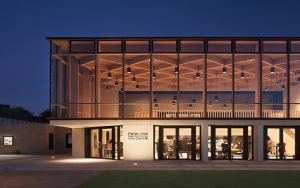
Perse School - Peter Hall Performing Arts Centre
A highly sustainable, professional‑grade performance A highly sustainable, professional‑grade performance and creative hub.
An EPC ‘A' rated cultural hub with a 400-seat auditorium, rehearsal, teaching, and support spaces. Key features include ground source heat pumps, a hybrid ventilation system, and a 13 KW PV array. Winner of the 2019 RIBA National and RIBA East Awards.
Set within the historic grounds of The Perse School in Cambridge, the new Peter Hall Performing Arts Centre (PAC) honours its namesake through artistic and environmental excellence. Conceived as a social heart for the campus, its triple-height galleried foyer serves as a café by day and a gathering space by night. The building includes a flexible 400-seat auditorium, daylight-filled studios, and full back-of-house facilities. Skelly & Couch delivered the full MEP design for the professional-grade theatre, ensuring exceptional comfort, energy efficiency, and performance. The project achieved an EPC ‘A' rating and won RIBA National and East awards.
A glazed façade brings abundant natural light into the foyer and interior spaces, establishing a visual connection with the courtyard ahead, while the auditorium also maintains a strong link to the outdoors through daylighting and views to the greenery behind.
Comfort and efficiency are further enhanced by a ground source heat pump that supplies efficient, year-round heating and cooling. Optimal air quality is maintained through automated windows and a mechanical ventilation system, partly powered by a 13kW rooftop PV array, cutting emissions and reducing reliance on the grid.
For over 80% of the year, the auditorium relies on silent, natural ventilation via under-seat plenums. Warm air rises and is exhausted through two large, attenuated chimneys, preserving acoustic isolation. Mechanical ventilation activates only during full-capacity performances. This sophisticated sustainable design merges aesthetic appeal with practical performance to create an environment that is both comfortable and conducive to the arts.
At the heart of the school community, the Peter Hall PAC breathes life into theatre through its strategic embrace of sustainability—nurturing a space where future voices rise, explore, and shine.
Awards
2019 RIBA National Award Winner
2019 RIBA National Award Winner
2019 RIBA East Award Winner
2020 Cambridge Design & Construction Best New Building Award (over £2m) Commendation
2020 Cambridge Design & Contruction Craftsmanship Award Winner
2020 Chicago Athenaeum International Architecture Award Winner
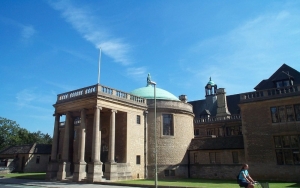
Rhodes House, Oxford
Skelly & Couch has completed Stage 4 design at the Grade II*-listed Rhodes House, Oxford, for a new world-class convening hub designed to encourage the global exchange of ideas across all cultures and nationalities.
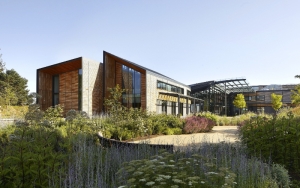
RHS Garden Wisley - National Centre for Horticultural Science and Learning
Garden Science Hub with Public Exhibition, Garden Science Hub with Public Exhibition, Members Library and Archive Space.
A 4,700m² hilltop building, featuring a roof terrace at the highest point of celebrated gardens within a significant Green Belt landscape, includes advanced research labs, libraries, and classrooms. Future-proof services for the building, gardens and the wider infrastructure were provided.
The RHS Hilltop development is the UK's first dedicated centre for horticultural and environmental science, featuring research labs, exhibition spaces, libraries, classrooms, an herbarium, and a café.
Skelly & Couch provided energy modelling, environmental design, and daylight and overheating analysis, drawing on experience from projects at the Royal Botanic Gardens, Kew, and Wakehurst Place. Working closely with garden designers, they created a climate-resilient, future-proof infrastructure for the Hilltop gardens and wider site.
The building’s design maximises natural light and ventilation through rooflights, while exposed thermal mass supports passive cooling, and high-specification glazing minimises summer overheating. A sustainable urban drainage system (SUDS) integrates ponds, infiltration trenches, basins, and swales into the landscape, with possible links to an irrigation storage pond.
To mitigate noise from the nearby A3 road, the herbarium archive is enclosed by thick walls, stabilising temperatures, while ground-coupled air ducts and hygroscopic materials further manage humidity, ensuring optimal conditions.
Active design measures further enhance the building’s sustainability, cooling draws on the site's irrigation system, using river and borehole water; and energy-saving features include photovoltaic cells offsetting 10% of the building's carbon emissions, mechanical ventilation with heat recovery, and coordinated power supplies to minimise voltage drop.
Beyond delivering MEP and sustainability services for the new building, Skelly & Couch also designed MEP, SUDs and drainage systems for the surrounding gardens and the wider infrastructure masterplan. The building form created three primary gardens— The Health and Wellbeing Garden (designed by Matt Keightley), The Wildlife Garden and The World Food Garden (both designed by Ann-Marie Powell) —along with smaller teaching and convening spaces.
RHS Wisley creates a sustainable hub for research, education, and community, with a harmonious integration of the building and landscape.
Awards
2021 – Guildford Design Award Winner Public Realm.
2021 – Guildford Design Award Winner Public Realm.
2022 – WAN Awards – Civic Institutes and Community Space Bronze.
2022 – AJ Architecture Award Finalist – Civic projects.
2023 – Civic Trust Award Regional Finalist.
2023 – Selwyn Goldsmith Award Finalist.
2023 – RIBA South East Award Winner.
An AJ Architecture Awards 2022 finalist in the Civic Projects category. A Regional Finalist for both a 2023 Civic Trust Award and a Selwyn Goldsmith Award for Universal Design. Winner of a 2023 RIBA South East Award. See the judges' citation: https://www.ribaj.com/buildings/regional-awards-2023-south-east-wilkinsoneyre-rhs-hilltop-culture-entertainment
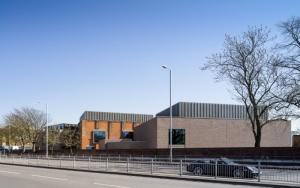
Richmond Adult Community College
The historic Richmond Adult Community College, which has its roots in the late 19th century (1895), has been given a new and sustainable lease of life by an impressive refurbishment and new-build development, meeting the highest standards of energy efficiency.
Royal Greenwich University Technical College
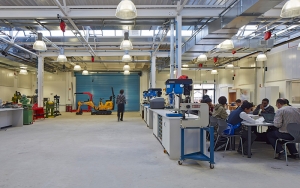
The Royal Greenwich University Technical College is a co-educational college for 600 14-18 year-olds. The UTC specialises in engineering and construction, with a particular focus on transport and sustainable technology, equipping students with vital technical skills that lead to apprenticeships, higher education or employment.
Ryde School, Isle of Wight
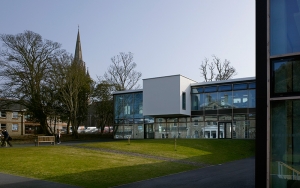
The project is a new-build teaching block for Ryde School on the Isle of Wight. The new build incorporates ADT workshops, arts studios, a visitor reception and new kitchen and dining facilities for the school. It also relieves congestion and improves the entrance to the school by providing a car-free courtyard.